

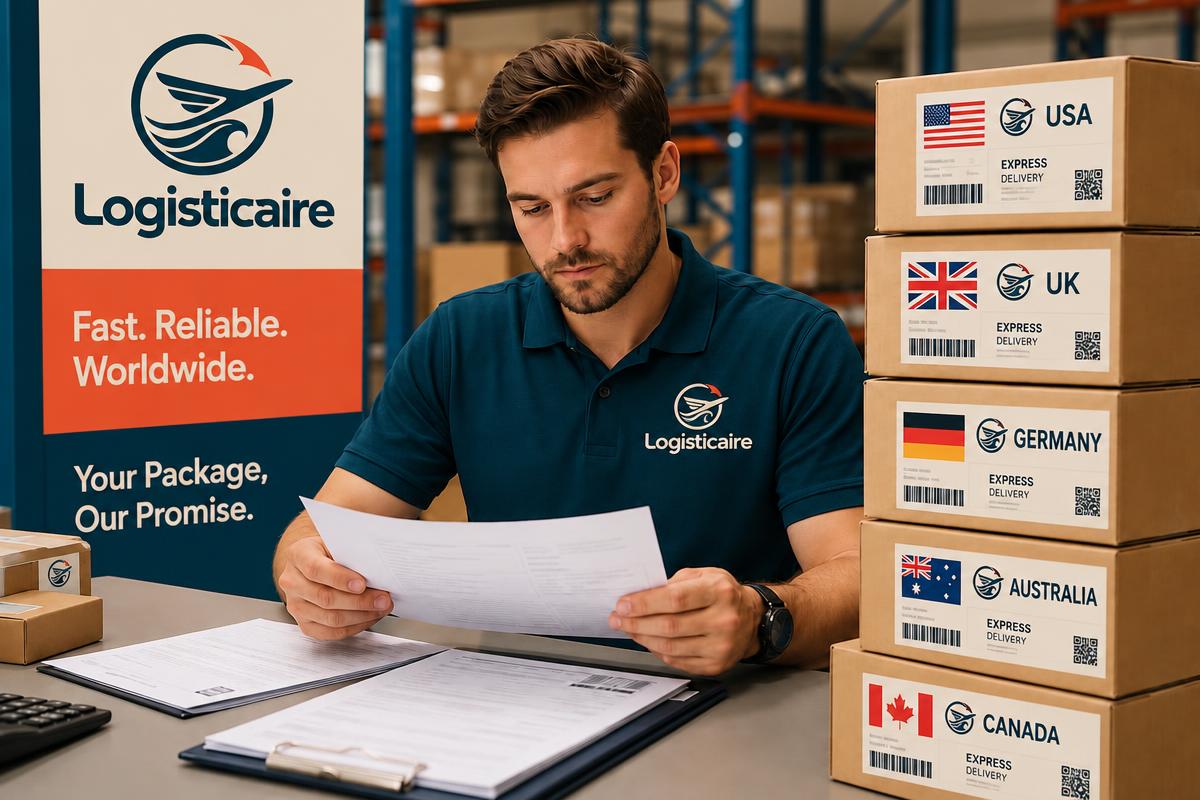
Expanding into international markets is one of the biggest growth levers for a small business — but shipping across borders comes with a learning curve. Between rate structures, customs documentation, and freight mode selection, it is easy to feel overwhelmed. This guide breaks it all down into actionable steps.
1. How international shipping rates work
International freight pricing is built on three core variables: weight/volume, distance, and service level. For small businesses, understanding how carriers calculate these charges is the first step to controlling costs.
Chargeable weight
Carriers use whichever is higher: actual weight or dimensional (volumetric) weight. Always pack efficiently to avoid paying for empty air.
Base rate + surcharges
Fuel surcharges, remote area fees, peak season adjustments, and currency fluctuations all affect your final invoice.
Door-to-door vs port-to-port
Door-to-door includes pickup and delivery. Port-to-port is cheaper but leaves you to handle local transport and customs.
2. Rate comparison: air vs sea vs road
Choosing the wrong mode can cost you thousands or delay a critical shipment. Here is a quick-reference comparison for typical small-business cargo:
| Factor | Air Freight | Sea Freight | Road Freight |
|---|---|---|---|
| Cost per kg | Highest | Lowest | Moderate |
| Transit time | 1–5 days | 15–45 days | 2–10 days |
| Best for | Urgent, high-value, light | Bulk, heavy, non-urgent | Regional, land-connected |
| Reliability | Excellent | Good | Very good |
| Eco footprint | Higher per kg | Lowest per kg | Moderate |
| Typical min charge | $45–$120 | $150–$500 (LCL) | $25–$80 |
Pro tip for startups:
If you ship less than a full container, LCL (Less than Container Load) sea freight often beats air on cost for anything over 100 kg — even with longer transit times. Plan inventory accordingly.
3. Customs documentation essentials
Incorrect or missing paperwork is the #1 cause of international shipment delays. Every cross-border shipment needs these documents at minimum:
Commercial Invoice
Declares the value, quantity, and description of goods. Must match the actual contents exactly. Customs uses this to assess duties.
Packing List
Details how items are packed, weight per box, and dimensions. Helps customs inspectors verify-courier handlers process efficiently.
Bill of Lading / Air Waybill
The contract between shipper and carrier. For sea: Bill of Lading (B/L). For air: Air Waybill (AWB).
Certificate of Origin
Proves where goods were manufactured. Required for trade-agreement tariff reductions (e.g., USMCA, EU preference programs).
Export / Import License
Required for restricted goods: electronics, chemicals, food, medical devices, and dual-use items. Check both origin and destination country rules.
4. HS codes and duty calculations
The Harmonized System (HS) code is a 6-to-10 digit classification every product needs for customs. Getting it wrong can lead to overpaid duties, seizures, or penalties.
How to find your HS code
- Start with your product category on the official HTS (Harmonized Tariff Schedule) database.
- Refine by material, function, and end-use. A "plastic bottle" and "glass bottle" have different codes even for the same liquid.
- Check with your broker if the code is ambiguous — misclassification penalties can exceed the shipment value.
- Update codes when product specs change (material swaps, new features).
Duty = (Customs value + Insurance + Freight) × Duty rate. Small businesses often forget to include freight and insurance in the customs value, leading to under-declaration and fines. Always declare the CIF value (Cost + Insurance + Freight).
5. Choosing the right freight mode
Use this decision tree to match your shipment to the optimal mode:
Choose Air when...
- Transit time matters more than cost
- Shipment is under 100 kg
- High-value or perishable goods
- You need express or same-day
Choose Sea when...
- Cost matters more than speed
- Shipping bulk or heavy cargo
- Lead time is 3+ weeks
- Full container or LCL options work
Choose Road when...
- Destination is on the same continent
- Frequent smaller shipments
- You need flexible pickup windows
- Cross-border trucking is available
6. Reducing costs as a small business
Consolidate shipments
Combine multiple orders into one larger shipment to hit volume breakpoints and reduce per-unit freight costs by 15–30%.
Negotiate contracts early
Even at low volumes, committing to a lane for 6–12 months unlocks preferential rates. Ask for a tiered pricing structure.
Use the right packaging
Dimensional weight kills margins. Use custom-fit boxes, remove excess filler, and consider poly-mailers for soft goods.
Prepay duties where possible
DDP (Delivered Duty Paid) lets you prepay duties and avoid surprise fees for your customer — improving conversion and reducing returns.
Leverage free trade agreements
Shipments between FTA countries (USMCA, EU-UK TCA, RCEP) may qualify for reduced or zero duty with a valid Certificate of Origin.
Work with a freight forwarder
A good forwarder buys space in bulk and passes savings to you. They also handle customs, saving you hours of admin work.
7. Common mistakes to avoid
- Undervaluing goods on the commercial invoice to reduce duties — this is fraud and carriers can blacklist you.
- Forgetting about import VAT / GST — customers may refuse delivery if hit with an unexpected tax bill.
- Using the wrong HS code — leads to delays, penalties, or seizure.
- Not insuring high-value shipments — carriers' default liability is often $100 or less per kg.
- Ignoring Incoterms — who pays for what (freight, insurance, duties) must be crystal clear in your contract.
- Shipping restricted items without licenses — batteries, aerosols, and liquids have strict transport rules.
8. Getting started with Logisticaire
We built Logisticaire to make international shipping as simple for a 2-person startup as it is for a Fortune 500. Here is how to begin:
Get a quote
Enter origin, destination, weight, and dimensions. Receive live rates across air, sea, and road in under 30 seconds.
Book & print labels
Confirm your shipment, pay online, and generate all required documents automatically — including commercial invoices and packing lists.
Track door-to-door
Follow your shipment in real time from pickup to final delivery, with customs status updates and proactive delay alerts.